Meeting Fire Safety Regulations: What Specifiers Need To Know

Fire safety remains one of the most critical considerations in UK construction, and rightly so. In the years following the tragic events at Grenfell Tower, scrutiny around material performance, testing standards and compliance has reshaped how buildings are designed and specified.
As we move into 2026 and beyond, specifiers are under increasing pressure to ensure every component of the building envelope performs as intended, particularly the roof.
Why Roofing Fire Performance Matters
While much focus has been placed on façades and cladding systems, the roof plays an equally important role in a building’s fire strategy. Roof coverings must resist external fire spread, prevent flame penetration and perform reliably under testing conditions.
For many public sector and residential developments, achieving a B Roof T4 fire rating is now a key specification requirement.
A B Roof T4 classification confirms that a roof system has been tested to resist internal & external fire exposure, including spread of flame and penetration. In simple terms, it provides reassurance that the roof will not contribute to fire spread under defined conditions and is non-combustible.
For specifiers, that reassurance is essential.
Post-Grenfell: A Shift in Material Mindset
The construction industry has experienced a clear shift in how materials are evaluated. Compliance is no longer enough on its own; clients, insurers and regulators want transparency, certification and proven performance.
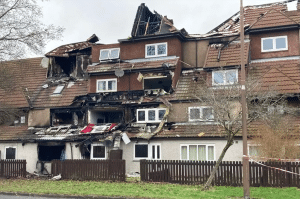
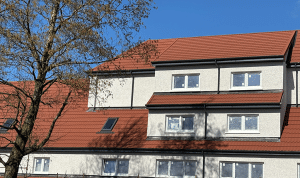
Above: Before & After of a block of flats in Scotland after a devastating fire; with new fire-proof roofing materials supplied by Metrotile UK LTD.
When specifying roofing for:
-
Schools and educational facilities
-
Healthcare buildings
-
Social housing developments
-
Community and public sector projects
Fire performance can’t be an afterthought. It must be embedded into the specification from the outset.
Pressed steel roofing systems that achieve B Roof T4 classification offer a robust, non-combustible solution that aligns with modern fire safety expectations while still delivering on aesthetics and durability.
Balancing Compliance with Practicality
Beyond fire rating, specifiers must consider installation, longevity and whole-life cost. A roofing system that performs well in fire testing but requires excessive maintenance or early replacement creates long-term risk.
Modern steel tile systems combine:
-
Tested fire performance
-
Long-term weather resistance
-
Lightweight construction
-
Minimal maintenance requirements
For local authorities and developers, this means reduced lifecycle costs alongside compliance confidence.
Looking Ahead
Regulatory frameworks continue to evolve, and scrutiny around building materials shows no signs of slowing down. Specifiers who prioritise independently tested systems with clear certification will be better positioned to meet future requirements.
The key takeaway? Fire performance should never be reactive. It should be a deliberate, informed specification choice — one that protects buildings, occupants and reputations for decades to come.
Do you have a project in mind in which Metrotile’s fire-proof roof tiles would come in handy? Contact us for more information.